Best VPN for Multiple Devices in 2026
Surfshark is the best VPN for covering multiple devices at once, while PIA, NordVPN, ExpressVPN, and CyberGhost each fit different households.
 By Michael Miller · Updated July 24, 2026
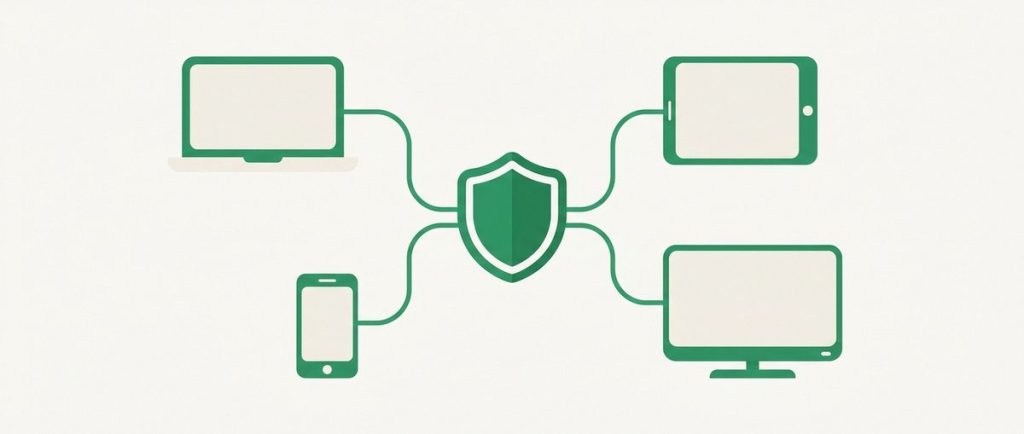
If your VPN only protects one laptop, it is not solving the real household problem. Most people bounce between phones, tablets, work laptops, smart TVs, streaming sticks, game consoles, and travel devices. The best VPN for multiple devices protects those connections without signing out of one screen to secure another.
For most households, Surfshark is the best pick because it supports unlimited simultaneous connections. Private Internet Access is the closest unlimited alternative. NordVPN and ExpressVPN are better if you want a more polished premium app experience and can live with their device caps, while CyberGhost fits smaller households that want a cheaper streaming-friendly VPN.
Best VPNs for multiple devices compared
Device limits below come from current provider support material. Checkout prices and renewals vary by region and campaign, so compare the full first charge and recurring amount after you know which connection model fits the household.
| Provider | Best for | Multiple-device highlight | Devices |
|---|---|---|---|
| Surfshark | Best overall household pick | Unlimited simultaneous connections for phones, laptops, tablets, and TVs | Unlimited |
| Private Internet Access | Unlimited option with advanced settings | Unlimited simultaneous connections across a broad app range | Unlimited |
| NordVPN | Best premium balance | One predictable allowance across its consumer VPN apps | 10 |
| ExpressVPN | Best easy premium setup | The device limit rises with the selected plan tier | 10-14 by tier |
| CyberGhost | Best for a smaller household | A fixed cap that suits a simple phone, laptop, and TV setup | 7 |
1. Surfshark: best overall for multiple devices
Surfshark is the clearest answer if your main problem is device count. Its own 2026 materials still say one subscription can be used for unlimited simultaneous connections, which means you can install it across your phone, tablet, laptop, desktop, smart TV, and a partner’s devices without rationing slots.
That matters more than it sounds. A 5-device VPN can look fine until you add a work laptop, a travel tablet, a Fire TV Stick, and a second phone. Surfshark avoids that account-management friction.
Surfshark’s device policy is the reason to shortlist it; the discount is secondary. Compare Starter’s full first bill and renewal in your local checkout, because the lowest monthly equivalent requires an upfront term and changes by campaign.
The drawback is that the cheapest price usually requires a long upfront commitment. If you want one VPN account for a home full of devices, Surfshark is the best fit.
Read our full Surfshark review for its current plans, apps, and privacy evidence.
2. Private Internet Access: best advanced unlimited alternative
Private Internet Access is the other obvious choice for device-heavy homes. PIA’s support center says a single subscription allows an unlimited number of simultaneous connections, and its own materials describe unlimited device support across computers, mobile devices, and routers.
PIA is especially useful when your “multiple devices” problem includes desktops, Linux machines, Android phones, streaming boxes, and routers. It gives you more settings than Surfshark, including granular controls for people who like to tune app behavior.
PIA can be good value, but compare its full first bill, term, and renewal directly. The unlimited-device policy is stable enough to make the shortlist; a floating promotional monthly equivalent is not.
The honest drawback is ease of use. PIA is not hard to use, but it feels more technical than Surfshark or ExpressVPN. If you are setting up a VPN for family members who never want to touch settings, Surfshark is the friendlier unlimited-device pick.
Read our full Private Internet Access review for its current plans, apps, and privacy evidence.
3. NordVPN: best premium pick if 10 devices is enough
NordVPN is not unlimited, but its current 10-device limit is enough for many people. NordVPN’s own 2026 pricing and support materials state that one account can secure 10 devices at the same time. That covers a phone, tablet, laptop, desktop, streaming stick, and several backup devices without much strain.
NordVPN makes sense when device count is important but not the only requirement. You also get a mature app ecosystem, strong security controls, and broad support across the usual operating systems. For many readers, 10 reliable slots beat unlimited slots on a VPN they do not enjoy using.
Basic includes the same 10-connection allowance relevant here. Check the complete first charge and annual renewal in your region rather than comparing an approximate promotional range.
The drawback is obvious: 10 devices can become tight in a larger household. Choose NordVPN if you want a premium all-rounder and your device count is predictable.
Read our full NordVPN review for its current plans, apps, and privacy evidence.
4. ExpressVPN: best simple setup with tiered device limits
ExpressVPN is the best choice here for people who value simplicity more than the lowest price or unlimited coverage. Its support page says the current tiered plans support 10 devices on Basic, 12 on Advanced, and 14 on Pro. That is a useful improvement if you remember older VPN plans with much smaller limits.
The setup experience is ExpressVPN’s main selling point. It is a good fit if you are installing a VPN for a household where nobody wants to compare protocols or troubleshoot every device separately. Install, sign in, connect, and repeat.
Pricing is the part to check carefully because the tier changes both price and device count. Compare the actual Basic, Advanced, or Pro tier in checkout; do not combine one tier’s promotional price with another tier’s connection allowance.
The drawback is value. Surfshark and PIA cover unlimited devices for less, so ExpressVPN only makes sense if the smoother app experience is worth paying for. It is a premium convenience pick, not the best pure device-count deal.
Read our full ExpressVPN review for its current plans, apps, and privacy evidence.
5. CyberGhost: best for smaller homes that stream
CyberGhost is the budget pick for people who need several devices, not endless devices. Current CyberGhost materials still describe 7 simultaneous connections per subscription. That can cover a small setup: phone, laptop, tablet, smart TV, streaming stick, and a spare device.
It can fit a smaller household because the app experience is straightforward and the 7-device rule is easy to count. Compare the complete local bill and renewal after confirming that seven active connections are enough.
The limitation is the cap. Seven devices can disappear quickly if you are protecting more than one person. It also gives you less breathing room than NordVPN’s 10-device allowance and far less than Surfshark or PIA’s unlimited model.
Choose CyberGhost if you want a low-cost VPN for a smaller home and you can count your active devices before buying. Skip it if you want one subscription that nobody in the house ever has to think about.
Read our full CyberGhost review for its current plans, apps, and privacy evidence. If your main reason is TV access, also compare our guide to the best VPN for streaming.
What actually matters when one VPN has to cover everything

Start with simultaneous connections, not installations. Some VPNs let you install the app on many devices but only connect a smaller number at the same time. If your household streams, works, and travels at the same time, unlimited connections are cleaner.
Check platform coverage next. A multi-device VPN should have native apps for Windows, macOS, iOS, Android, and major TV platforms, plus router setup instructions for devices that cannot run VPN apps. If your home uses ASUS hardware, our ASUS router VPN guide explains ASUSWRT, VPN Fusion, and the supported protocol paths.
Look at account friction. The best VPN for multiple devices should not force you to constantly sign out, remove old devices, or ask support to reset device slots. Unlimited plans win here, but a clear 10-device plan can still work if the provider makes device management simple.
Speed and stability matter more when several devices connect at once. You do not need to chase a published speed number for this page; you need stable apps and a refund window long enough to test your real devices.
Finally, decide whether you need one account for one person or one home. For teams or business use, check the provider’s business plan instead of stretching a consumer account.
For the basics of how VPNs work, see our guide to what a VPN is. If one of your devices is a TV stick, our best VPN for Firestick guide is the better setup companion.
How to set up a VPN across multiple devices

- Count the devices you actually want protected: phones, tablets, laptops, desktops, TV boxes, travel devices, and shared family devices.
- Separate “always connected” devices from occasional devices. This tells you whether a 7-device or 10-device plan is enough.
- Choose Surfshark or PIA if you do not want to manage a cap. Choose NordVPN or ExpressVPN if their app experience matters more and your count fits the plan.
- Install the official VPN app from the provider’s website or your device’s app store. Avoid random APK mirrors and third-party installers.
- Sign in on the most important devices first: phone, primary laptop, tablet, and TV device.
- Use nearby servers for daily privacy and only switch countries when you need a specific region.
- Test the apps you rely on: banking, work tools, streaming services, smart-home apps, and games.
- Add router setup only for devices that cannot run the VPN app directly, such as some consoles and smart TVs.
Do not assume every device needs the VPN on all the time. A work laptop may already have a company VPN, and a banking app may dislike VPN traffic. The best setup protects the devices that benefit without making daily use annoying.
Our pick
Surfshark is our pick for the best VPN for multiple devices in 2026. It has the cleanest answer to the core problem: unlimited simultaneous connections across the household.
Choose PIA instead if you want unlimited devices with more technical control. Choose NordVPN if 10 devices are enough and you want a stronger premium all-rounder. Choose ExpressVPN if you want the easiest setup and can live with tiered limits. Choose CyberGhost only if 7 active devices clearly cover the household.
For the wider product decision, read our full Surfshark review.
FAQ
What is the best VPN for multiple devices?
Surfshark is the best VPN for multiple devices for most people because it supports unlimited simultaneous connections and has straightforward apps. PIA is the best alternative if you also want unlimited devices but prefer more advanced settings.
How many devices can use one VPN account?
The device limit depends on the provider. Current support material lists unlimited simultaneous connections for Surfshark and PIA, 10 for NordVPN, 10 to 14 for ExpressVPN depending on tier, and 7 for CyberGhost.
Is an unlimited-device VPN really unlimited?
Unlimited-device VPNs still have acceptable-use rules. They are meant for personal or household use, not resale or abuse. For normal use across phones, laptops, tablets, and TVs, Surfshark and PIA are the most convenient options because you do not have to count slots.
Should I install the VPN on every device or on my router?
Install the VPN app directly when you can. It gives each phone, laptop, or tablet its own controls and works away from home. Router setup is useful for devices that cannot run VPN apps, but it can be slower to manage and may route every connected device through the same location.
What is the best free VPN for multiple devices?
A free VPN is usually a poor fit for multiple devices because free plans tend to limit device count, locations, speeds, or streaming support. Proton VPN is the free option we would check first because its own 2026 listing still promotes a free VPN, but current 2026 pricing coverage describes the free plan as limited to one device at a time. For a household, a paid unlimited-device VPN is the more practical choice.
Michael Miller