Is It Illegal to Use a VPN for Netflix in 2026?
Do you need to access Netflix but are unable to due to restrictions? Is it legal to use a VPN for Netflix? Let's find out.
 By Brian Rucker · Updated July 22, 2026

No, using a VPN for Netflix is not itself illegal in most countries. The important distinction is between breaking a law and conflicting with a private service’s terms. If VPNs are lawful where you are, connecting one while using Netflix is generally not a crime. Trying to make Netflix treat you as if you were in another country can, however, conflict with Netflix’s geographic access rules.
The usual practical result is not a lawsuit. Netflix may show a VPN or proxy error, restrict playback, or display only titles it licenses worldwide. Its contract still reserves the right to restrict or terminate service for violations, so nobody should promise that an account carries zero risk. This is general information, not legal advice; check the rules in your location, especially in countries that regulate or restrict VPN services.
| Question | Current answer | Practical consequence |
|---|---|---|
| Is the VPN itself illegal? | Usually not, but local law controls | Check the rules where you are |
| Does region-hopping fit Netflix’s terms? | It conflicts with Netflix’s geographic access limit | Netflix may restrict the catalog or playback |
| Is a lawsuit the normal response? | No documented subscriber case emerged in our 2026 research | A playback block is the realistic immediate risk |
Is using a VPN for Netflix illegal or just against the rules?
There are three separate questions that often get mixed together:
- Is the VPN legal where you are? In most countries, the technology itself is lawful. Some jurisdictions restrict which VPN services may operate or how people may use them, so local law always comes first.
- What are you doing through the VPN? A VPN does not make copyright infringement, fraud, or any other unlawful act legal. Watching through a paid Netflix account is not the same thing as obtaining pirated content, but the VPN does not grant new rights either.
- Does the use fit Netflix’s contract? Netflix’s Terms of Use say you may access content primarily in the country where you established the account and only where Netflix offers and licenses that content. Using a remote location to reach a different catalog conflicts with that geographic limitation.
That last point is contractual, not automatically criminal. A terms violation can let a company limit a service without turning the conduct into a crime. The legal position can still vary by country and by what you do, which is why a universal “VPN equals legal” promise would be irresponsible.
What Netflix’s current rules actually say
Netflix’s Terms of Use were last updated on April 10, 2026. They do not simply say “all VPNs are forbidden.” Instead, the access clause limits viewing by account country, service availability, and content licensing. The same terms let Netflix restrict or terminate service if a user violates the agreement or uses the service illegally or fraudulently.
Netflix’s current Help Center is more specific about what happens when it detects a VPN. It says a VPN user may see only titles Netflix licenses worldwide. It also says VPNs are not supported for live events or on an ad-supported experience. If Netflix displays its VPN/proxy message, its supported fix is to turn the VPN off and try again.
Netflix also says a VPN does not change the country attached to your account. That country changes only when you actually move and follow Netflix’s account process. A VPN can affect the network location Netflix sees for a session; it does not rewrite your subscription or billing country.
This makes the honest answer more nuanced than “Netflix bans VPNs.” Using a VPN as a privacy tool while viewing content Netflix makes available globally is different from choosing a remote exit location to reach another regional catalog. The latter is where the terms conflict becomes clear.
How a VPN changes what Netflix sees
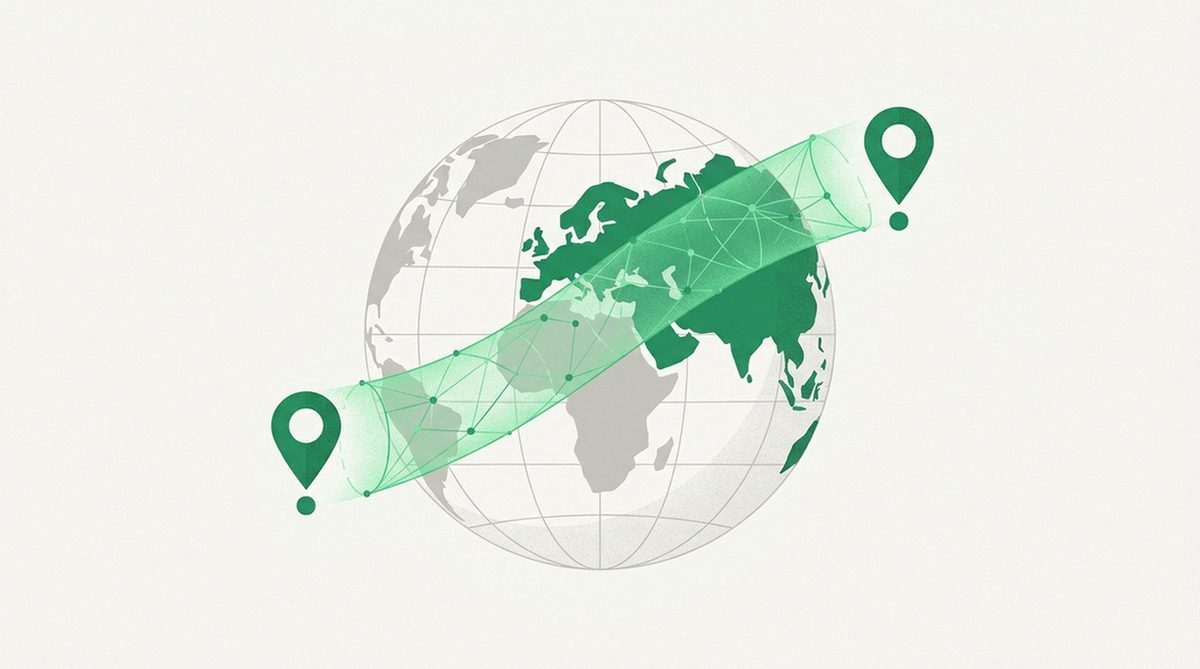
A consumer VPN creates an encrypted connection between your device and a VPN server. Your traffic then reaches Netflix from that server, so the public IP address visible at the network edge belongs to the VPN server rather than your home connection, the same mechanism explained in our guide on whether a VPN can be tracked.
If the server is in another country, that IP address can make the connection appear to come from that country. This is the basic mechanism behind attempts to view a different regional catalog; our guide to how to change your Netflix region explains the practical setup and its limits.
Netflix can classify an address as belonging to a VPN or proxy. When that happens, it may narrow the visible catalog or refuse playback and ask you to disable the service. Changing servers may help, but no provider can guarantee an address, country, or title will remain available.
The encrypted tunnel protects traffic only between your device and the VPN service. It does not make you invisible to Netflix. You still sign in to the same account, and Netflix can still associate viewing activity with that account.
What a VPN does not do for Netflix
A VPN is useful for connection privacy, but it is not a legal shield or a universal streaming key. In particular, it does not:
- change the official country, payment details, or household status of your Netflix account;
- give Netflix distribution rights it does not hold in your physical location;
- make an unlawful activity lawful;
- hide your identity from a service where you remain signed in;
- guarantee access to a regional library, live event, ad-supported plan, or specific title; or
- prevent Netflix from applying its contract or showing a proxy error.
It also cannot guarantee better video performance. Encryption and a longer network route can add overhead. A nearby server may be sensible when privacy is the goal, while a distant server usually adds more opportunities for delay or blocking.
The realistic risks if Netflix detects your VPN
For an ordinary subscriber, the immediate risk is loss of playback or a reduced catalog. Netflix’s own troubleshooting pages focus on turning off the VPN, checking the detected country, and retrying without the location-masking connection.
Independent reporting updated in 2026 found no documented Netflix lawsuit against a subscriber merely for streaming through a VPN. That does not cancel Netflix’s contractual remedies. The accurate formulation is: a block is the realistic outcome; legal action has not been the ordinary response; account restriction remains contractually possible.
Do not treat that low practical risk as permission to ignore local law. If VPN use is restricted where you live or travel, the local rule matters before Netflix’s policy does.
A practical VPN recommendation for Netflix users
First decide what problem you are solving. If you want privacy on hotel, airport, or shared Wi-Fi, use a reputable VPN and a nearby server. If Netflix limits the catalog or shows a proxy error, disconnect the VPN for that session rather than assuming repeated server changes are risk-free or guaranteed to work.
If you still want one paid service for general privacy and occasional streaming, NordVPN is our practical pick. Its current SmartPlay documentation says the streaming-oriented feature is built into its apps, so there is no separate switch to configure. That does not override Netflix’s rules or guarantee a regional title. Nord Security and Surfshark joined forces under one group, while the companies say their products and infrastructure continue to operate independently.
Before subscribing, compare the limitations and alternatives in our best VPN for Netflix guide, including whether VPN Unlimited works with Netflix, and read our full NordVPN review. Buy based on the VPN’s broader privacy value, device fit, support, and refund terms—not a promise that Netflix access will work forever.
FAQ
Can Netflix ban my account for using a VPN?
Netflix’s Terms of Use reserve the right to restrict or terminate service for a terms violation. In day-to-day use, its published VPN guidance focuses on blocking playback, limiting the catalog, and asking you to turn the VPN off. There are no documented 2026 reports of Netflix suing ordinary subscribers merely for VPN streaming, but that does not make account action contractually impossible.
Is it illegal to change your Netflix region with a VPN?
In a country where VPN use is lawful, changing the network location Netflix sees is generally a terms and licensing issue rather than a crime by itself. Netflix’s terms limit access by account country and licensed location. Local law and any separate unlawful conduct can change the answer, so check the rules that apply to you.
Does Netflix allow VPNs in 2026?
Netflix does not support VPN viewing for live events or ad-supported experiences. For other viewing, its Help Center says detected VPN users may see only titles available worldwide. That is narrower than normal regional access and is not an endorsement of using a VPN to reach another country’s catalog, such as our guide on how to watch Japanese Netflix from anywhere.
What should I do when Netflix says I am using a VPN or proxy?
Netflix’s supported fix is to turn off the VPN or proxy and try again. If you did not knowingly enable one, check antivirus software, router settings, and other privacy tools that may include a VPN. You can also use Netflix’s Fast.com location check to see which country the connection reports.
Brian Rucker